
Thrilled to welcome you!

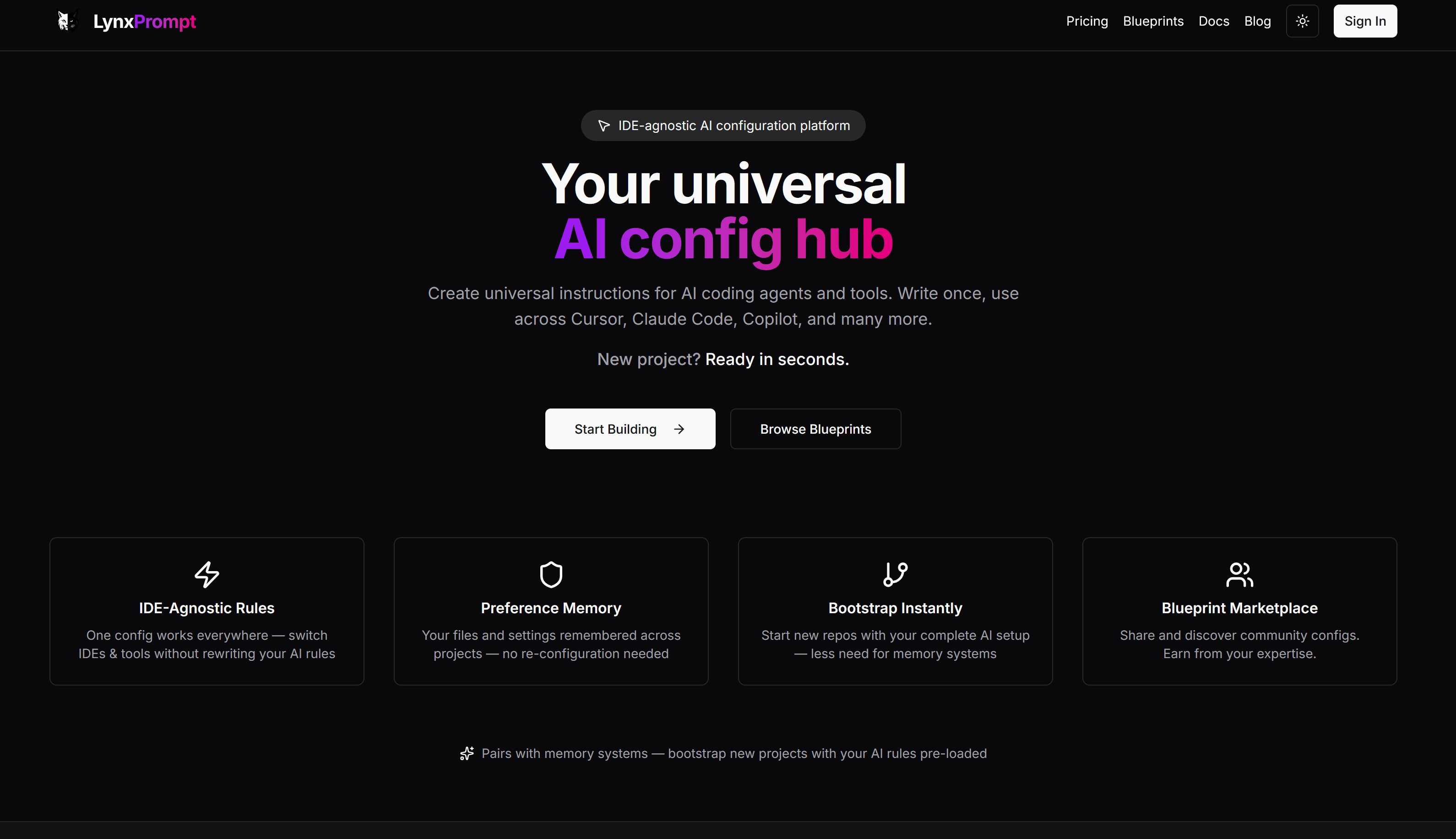
If you’re here, you probably know the feeling: you spin up a new repo, open your AI coding tool of choice, and then you lose time rewriting the same “how we do things here” instructions yet again. I built LynxPrompt because I got tired of that loop, and because I think developers deserve a setup that doesn’t fall apart the moment the chat context runs out. The goal is simple: make AI IDE configuration effortless, so your rules are always there, persistent, and actually consultable when the agent needs them.
LynxPrompt is an IDE-agnostic AI configuration platform. The idea is: write your instructions once, and reuse them across tools without constantly reformatting and re-explaining your preferences. It’s meant to work across a growing ecosystem of agents and IDEs, so you can switch tools without rewriting your “AI rules” from scratch.
What I personally care about most is bootstrapping. Starting a new repository shouldn’t come with a side quest called “teach the agent everything again.” LynxPrompt is built to help you bootstrap new repos with an AI-ready setup in seconds, and keep your preferences consistent across projects, so you’re not rebuilding the same config universe every time you git init.
There’s also a bigger ambition here than just saving minutes. LynxPrompt is not meant to be just a prompt-sharing site. It’s meant to be a place where configs become reusable assets: you can generate them, share them, discover what other devs are doing, and even monetize the work if you’ve put real thought into your setup. The Blueprint Marketplace is a big part of that—because prompt/config engineering is work, and good work should be valued.
Under the hood, this whole thing is basically my attempt to solve a problem that keeps showing up in modern AI-assisted development: context limits and “memory” that isn’t really memory. The approach here is to lean on repo-native, persistent configuration files so the agent has something stable to consult, instead of relying on a long conversation thread that eventually gets truncated or forgotten.
And yes, LynxPrompt can pair nicely with memory systems too—it’s designed to help you start with your rules pre-loaded.
If you’re the kind of developer who cares about clean repos and standards (respect), you’ll probably appreciate that LynxPrompt is also compatible with AGENTS.md, which is becoming an open standard used across a lot of projects.
My hope is that this makes configs more portable, less tool-specific, and easier to reason about when you’re collaborating with other humans and other agents.
I’m not going to turn this post into documentation—there’s already a docs section for that—but I will say this: if you try LynxPrompt and something feels unclear, awkward, or like it adds steps instead of removing them, I want to hear about it. The entire point is to reduce friction, not rename it.
One more thing: I really want this to be built with the community, not just shipped at the community. If you want to help shape how blueprints work, how configs are generated, what integrations matter next, or you just want to share the weird edge cases you’ve hit across Cursor/Claude Code/Copilot-style workflows, come hang out on Discord.
Thanks for checking out LynxPrompt. If you’re building serious software with AI agents and you’re tired of re-teaching the same rules every Monday, I think you’ll feel at home here.